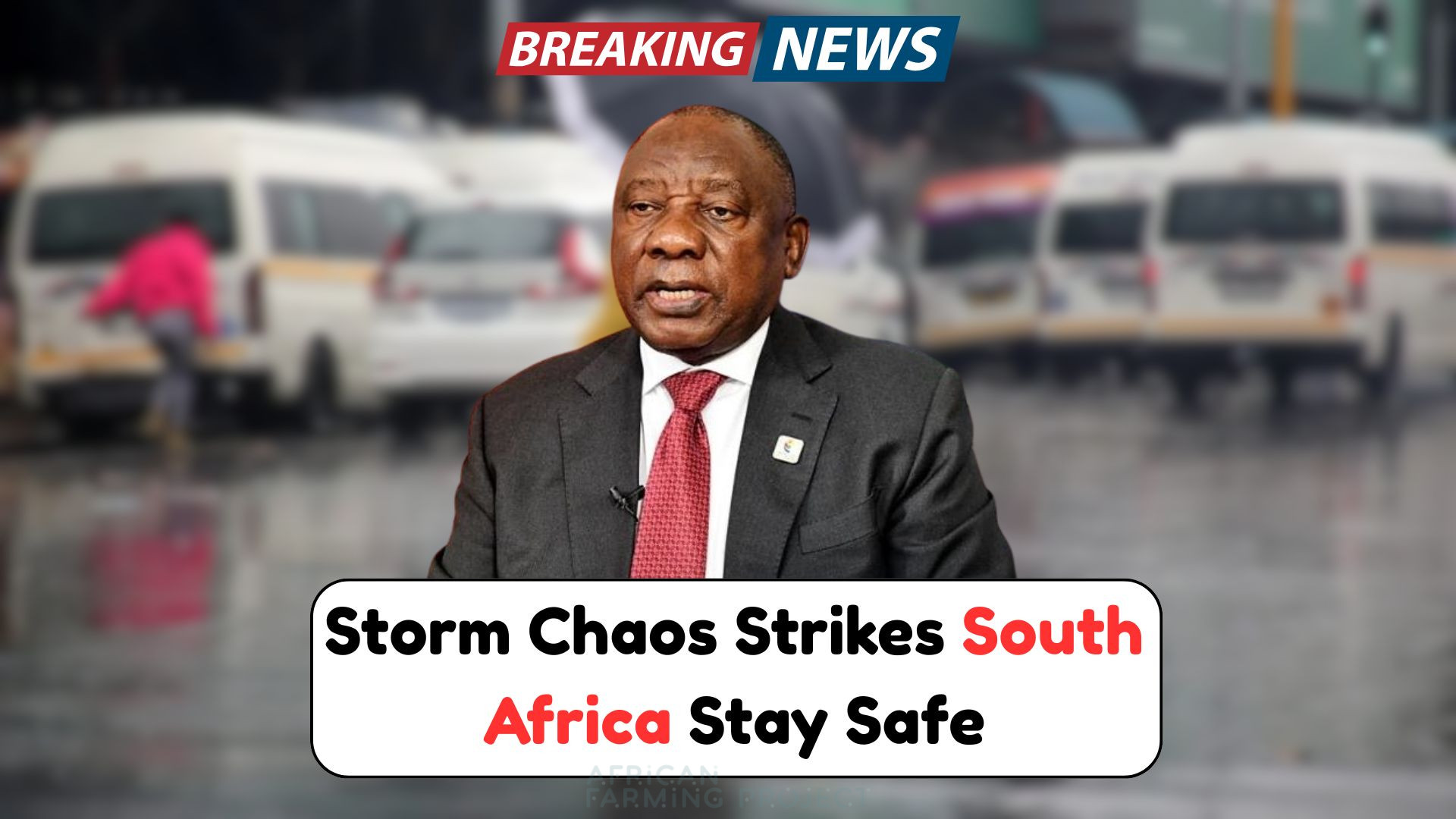
Severe Storms Hit South Africa – South Africans are facing an increasingly dangerous weather situation as a massive storm system rolls across the nation this week. The South African Weather Service (SAWS) has issued a Red Level Alert, the highest level warning, for severe thunderstorms, intense rainfall, flash floods, and associated dangers across several provinces. With roads already waterlogged in some areas and drainage systems at risk of overflowing, the situation is developing rapidly. The alert spans from Tuesday through the weekend and covers much of the central and eastern parts of the country. This severe weather event is being compared to the catastrophic April 2022 floods that hit KwaZulu-Natal, but experts warn the impact may be more widespread and prolonged this time. The combination of saturated ground, poor drainage in informal settlements, and insufficient infrastructure in rural areas could cause major humanitarian and economic challenges.
Severe Storms Hit South Africa – Full Forecast and Timeline
As per the latest warnings from the South African Weather Service, several provinces are at high risk of experiencing severe weather this week. The storm system is expected to bring heavy rainfall, thunderstorms, and flash floods to regions including Gauteng, KwaZulu-Natal, Eastern Cape, and Free State. The weather alerts vary by province and day, with some areas under a full Red Alert. Residents are advised to closely follow the forecast and prepare for possible disruptions in daily life, transport, and electricity supply.
Provinces Most Affected:
- Gauteng – Particularly Johannesburg, Centurion, and Soweto; urban flooding likely.
- KwaZulu-Natal (KZN) – Coastal regions like Durban and inland areas like Pietermaritzburg to see torrential rains.
- Eastern Cape – Thunderstorms, persistent showers, and possible hail damage.
- Free State – High rainfall with a strong likelihood of road washouts and agricultural disruption.
- North West & Mpumalanga – Isolated but strong thunderstorms, especially Thursday onwards.
- Limpopo & Northern Cape – Lower alert level, but localized heavy downpours possible.
Storm Forecast Table by Region and Day
The storm system moving across South Africa is expected to affect different provinces on different days with varying intensity. This forecast table provides a clear breakdown of which regions will be hit, when the worst weather is expected, and what kind of impact residents should prepare for. Authorities urge everyone to closely follow this schedule and take preventive measures in advance.
| Day | Region | Forecast Description | Alert Level |
|---|---|---|---|
| Tuesday | Gauteng, KZN | Heavy thunderstorms, wind gusts, 50mm+ rainfall expected | Red |
| Wednesday | Eastern Cape, Free State | Continuous rain, hail, and local flooding | Red |
| Thursday | North West, Mpumalanga | Thunderstorms and river overflow warnings issued | Orange |
| Friday | Gauteng, Limpopo | Ground saturation could cause flash flooding in townships | Red |
| Saturday | KZN, Free State | Overflowing rivers, blocked roads, public transport delays | Red |
| Sunday | Eastern Cape | Rain weakening, isolated showers continue | Yellow |
What Does a Red Alert Mean for Citizens?
A Red Alert issued by the South African Weather Service indicates a high probability of dangerous weather events that pose a direct threat to life and property. The warning is meant to trigger community-level emergency preparation and alert the public to take urgent protective actions.

Precautionary Measures You Must Follow:
- Do not drive through flooded roads – even shallow water can wash away cars.
- Charge your mobile devices in case of prolonged electricity outages.
- Prepare sandbags or barriers if living near a river or low-lying area.
- Ensure children and the elderly stay indoors and are supervised.
- Avoid open spaces and tall structures during thunderstorms.
- Keep emergency contact numbers easily accessible.
Transportation, Schooling, and Load-Shedding Impact
As the storms intensify, various public services will likely face disruptions. Government departments have already issued public safety notices.
Transport Disruptions:
- Major highways such as N1, N3, and R59 may face partial closures due to waterlogging and low visibility.
- Taxis and bus services in Johannesburg and Durban may be rerouted or suspended.
Schools and Public Institutions:
- Schools in KwaZulu-Natal, Free State, and Eastern Cape may operate on reduced hours or shift to remote learning temporarily.
- Parents are urged to check with local school departments for updates.
Electricity & Water Supply:
- Eskom has warned of possible delays in maintenance during the storms, which could exacerbate load-shedding.
- Water and sanitation departments are concerned about contamination risks in flooded areas.
High-Risk Zones and Emergency Contact Table
Emergency teams are monitoring several high-risk zones prone to flash flooding and infrastructure collapse.
Top Flood-Prone Areas by Province:
| Province | High-Risk Areas | Emergency Contact Numbers |
|---|---|---|
| Gauteng | Alexandra, Centurion, Soweto | 10177, 112, 0800 428 8364 |
| KwaZulu-Natal | Umlazi, Chatsworth, Inanda, Durban CBD | 031 361 0000, 0800 033 694 |
| Eastern Cape | Mthatha, East London, Port Alfred | 043 605 7100, 0800 111 166 |
| Free State | Bloemfontein, QwaQwa, Botshabelo | 051 409 9600, 0800 111 011 |
| North West | Mahikeng, Klerksdorp | 018 389 0111, 107 |
In case of emergency, residents are encouraged to evacuate when advised, avoid spreading misinformation, and monitor real-time weather updates through SAWS.
What Makes This Storm Different From Others?
This weather event is characterized by a rare combination of prolonged rainfall, rapid storm movement, and widespread coverage. According to meteorologists, several unusual features make this system especially threatening:
- Rain accumulation could exceed 150mm in some areas over 4 days
- Multiple river systems are at flooding capacity
- Saturated ground from earlier rains increases risk of landslides
- Emergency services may struggle to reach rural communities
Government Response, Relief Funds & Aid Centers
The South African government has activated emergency procedures through several departments to minimize loss of life and property damage. Relief shelters are being prepared, especially in KwaZulu-Natal, Free State, and Eastern Cape.
Summary of Government Actions:
| Department | Action Taken |
|---|---|
| National Disaster Management Centre (NDMC) | Issued national emergency protocol |
| Dept. of Human Settlements | Identifying evacuation centers and shelters |
| Dept. of Health | Mobilized ambulances and medical teams |
| Local Municipalities | Alerted via satellite systems to coordinate on-ground relief |
| SAPS & SANDF | Deployment prepared for search, rescue, and food distribution |
If conditions worsen, the government may release emergency financial aid to affected municipalities for disaster relief and infrastructure repairs.
This week’s weather is not business as usual — it’s a national red alert scenario. The South African Weather Service and emergency teams are on the ground, but the true safety net lies in community preparedness and public awareness. By following official guidelines, avoiding risky behavior, and keeping informed through SAWS official channels, we can collectively mitigate the storm’s worst impacts.
FAQs about Severe Storms Hit South Africa
Q1: What should I do if my house is flooded?
Call local emergency numbers and evacuate if advised. Do not touch electrical equipment while wet.
Q2: Will insurance cover flood damage?
Check with your insurer. Most homeowner policies offer optional flood damage coverage.
Q3: How long will the Red Alert last?
It depends on rainfall progression. Most areas are under alert from Tuesday to Sunday.
Q4: Are relief shelters available for everyone?
Yes, especially in high-risk zones. Local municipalities will inform affected communities.
Q5: Can public transport be trusted during this week?
Travel only if necessary. Conditions can change rapidly. Always check with service providers first.