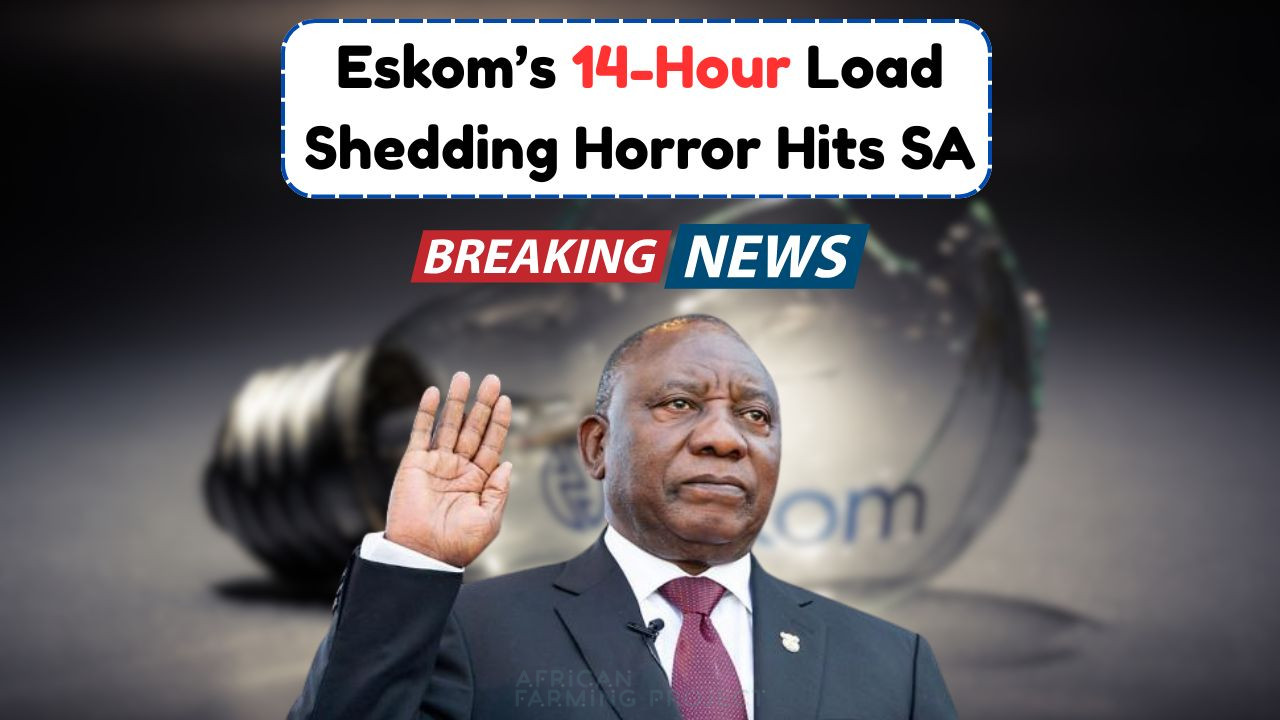
14-Hour Load Shedding – South Africans are once again forced to adapt to life without consistent electricity as Eskom announces an aggressive 14-hour load shedding schedule under Stage 6 conditions. These extended power cuts come as a result of a perfect storm of factors, aging infrastructure, poor maintenance, rising demand, fuel shortages, and unplanned breakdowns across multiple power generation units. The energy crisis has been building for years, but the current situation represents one of the most severe stages in South Africa’s history. While Eskom scrambles to manage its fragile power grid, millions of households, schools, hospitals, and businesses are left in the dark, literally and figuratively. This article provides a full breakdown of the new schedule, causes, implications, government responses, and survival strategies for affected citizens.
Why Is 14-Hour Load Shedding Being Implemented?
Eskom’s latest announcement has confirmed that the utility is now operating under an energy deficit so severe that Stage 6 load shedding has become the only option to prevent a total collapse of the national grid. What does this mean in simple terms? It means that Eskom must shed enough electricity demand to match what it can actually generate—and right now, the gap is massive. The failure of several major power stations, along with depleted emergency diesel reserves and reduced hydro-electric generation, has left Eskom with few alternatives. Load shedding is now the emergency lever Eskom pulls to stabilize the system and avoid a total national blackout.
Key Factors Contributing to Stage 6 Load Shedding:
- More than 16,500 MW of generation capacity is offline due to technical faults and maintenance delays.
- Eskom’s diesel reserves, used to power emergency turbines, are nearly exhausted due to financial and logistical constraints.
- Water shortages have hindered hydro-electric output.
- Several power station units have broken down unexpectedly, further worsening the shortage.
- Demand spikes in the mornings (5 AM to 9 AM) and evenings (5 PM to 9 PM) are straining the already stressed grid.
The situation has been described as “fluid and critical,” and while Eskom is attempting to bring some generating units back online, the timelines remain uncertain. Load shedding, for now, is the only way to avoid catastrophic failure.
Stage 6 Load Shedding: What South Africans Should Expect
Under Stage 6, consumers can experience as many as four separate power cuts per day, each lasting between 2 and 4.5 hours. In total, this amounts to approximately 12–14 hours of interrupted supply, making it difficult to perform everyday tasks such as cooking, charging devices, or running a business.

This has severe implications not only for private households but also for key public services such as clinics, water pumping stations, traffic control, public safety, and schools. The frequency and unpredictability of blackouts make planning extremely difficult, especially in rural areas where alternative power options are limited.
What You Can Expect Daily:
- At least 3–4 blocks of load shedding spaced throughout the day and night.
- Load shedding at inconvenient times—early morning, midday, and prime evening hours.
- Potential rolling blackouts if grid conditions worsen.
- Interruptions to phone networks, Wi-Fi connectivity, ATM services, and traffic lights.
- Increased vulnerability to theft and accidents due to poor lighting at night.
This situation is especially hard on students, small business owners, and patients relying on medical equipment. The government has acknowledged the impact but has so far been unable to offer a rapid solution.
Updated 14-Hour Load Shedding Schedule by Region
The following table offers an example of what a Stage 6 load shedding schedule may look like across major South African cities. While exact times vary based on your local municipality, this table gives a broad outline of what to expect.
| Region | Morning Cut (6-10 AM) | Midday Cut (12-4 PM) | Evening Cut (6-10 PM) | Total Hours |
|---|---|---|---|---|
| Johannesburg | 6:00 – 8:30 | 12:00 – 14:30 | 18:00 – 20:30 | 7.5 hours |
| Cape Town | 6:00 – 8:00 | 14:00 – 16:30 | 18:30 – 21:00 | 7 hours |
| Durban | 7:00 – 9:30 | 13:00 – 15:30 | 19:00 – 21:30 | 7.5 hours |
| Pretoria | 6:30 – 9:00 | 13:30 – 16:00 | 18:00 – 21:00 | 8 hours |
| Port Elizabeth | 5:30 – 8:00 | 12:30 – 15:00 | 18:30 – 21:00 | 8 hours |
| Bloemfontein | 6:00 – 8:30 | 13:00 – 15:30 | 19:00 – 21:30 | 7.5 hours |
| East London | 7:00 – 9:00 | 14:00 – 16:00 | 20:00 – 22:00 | 6 hours |
Note: For real-time updates, always refer to the EskomSePush app or your municipality’s electricity portal.
How to Prepare and Survive the Load Shedding Crisis
With no end in sight, preparation is crucial. Here are practical steps you can take to minimize the disruptions caused by load shedding:

- Keep your phone, laptop, and power banks fully charged at all times.
- Invest in rechargeable lights or solar lanterns to avoid being left in the dark.
- Prepare meals in advance and store them in containers to avoid relying on stoves or microwaves.
- Install surge protectors to safeguard electronics from voltage spikes.
- Avoid using elevators during high-risk blackout periods.
- Make a printed copy of your load shedding schedule and keep it visible.
In addition, households that can afford to invest in inverters, solar panels, or generators are encouraged to do so. Many communities are forming load-shedding support groups to share resources, such as power tools or refrigerated space.
Public Services Hit by Load Shedding
The consequences of extended blackouts go far beyond inconvenience—they can paralyze critical infrastructure. Here’s a summary of how various services are being affected:
| Service Sector | Impact |
|---|---|
| Hospitals | Depend heavily on backup generators; not all units supported |
| Clinics | Smaller clinics forced to reduce operating hours |
| Water Utilities | Reduced pumping power leads to water shortages |
| Schools | Learning interrupted; no power for lights or computers |
| Supermarkets | Food spoilage risk; cold storage relies on generators |
| Telecommunication | Signal loss and reduced bandwidth during outages |
| Financial Services | ATMs offline; online banking disrupted |
| Public Safety | Non-functioning traffic lights and alarms; increased crime |
In rural areas, the impact is even worse, with some communities lacking any backup power solutions.
The return of Stage 6 load shedding, with power cuts stretching to 14 hours a day, marks a grim chapter in South Africa’s ongoing energy crisis. With no quick fix on the horizon, citizens must take proactive steps to manage the situation—whether it’s investing in alternative power sources or simply planning their day around the blackout schedule. The burden is heavy, and frustrations are high, but preparation and community support can go a long way in surviving this crisis. Stay informed, stay safe, and most importantly, conserve energy whenever and wherever possible.
Departmental Contact Information
If you need information or want to report issues related to power outages, contact the following departments:
| Department | Contact Number | Email / Website |
|---|---|---|
| Eskom Customer Support | 0860 037 566 | [email protected] / www.eskom.co.za |
| City Power Johannesburg | 011 490 7000 | www.citypower.mobi |
| City of Cape Town | 0860 103 089 | www.capetown.gov.za |
| eThekwini (Durban) | 080 131 3013 | www.durban.gov.za |
| Nelson Mandela Bay | 041 506 5595 | www.nelsonmandelabay.gov.za |
| Tshwane Municipality | 012 358 9999 | www.tshwane.gov.za |
| Buffalo City Metro | 043 705 9220 | www.buffalocitymetro.gov.za |
Always report dangerous conditions such as exposed wires or broken transformers immediately.
FAQs about 14-Hour Load Shedding
- What does Stage 6 load shedding mean?
Stage 6 load shedding involves up to 14 hours of power cuts per day, usually broken into 3–4 intervals. - Are hospitals and clinics affected?
Yes, though major hospitals have backup systems. Smaller facilities may struggle without power. - Is this a permanent situation?
No, but there is no immediate timeline for when load shedding will end. Eskom hopes to reduce stages as generation improves. - Can individuals be exempt from load shedding?
Only essential infrastructure and designated high-priority zones are exempt. - What alternatives are available?
Private generators, solar power, inverters, and battery backups are the most common alternatives.